
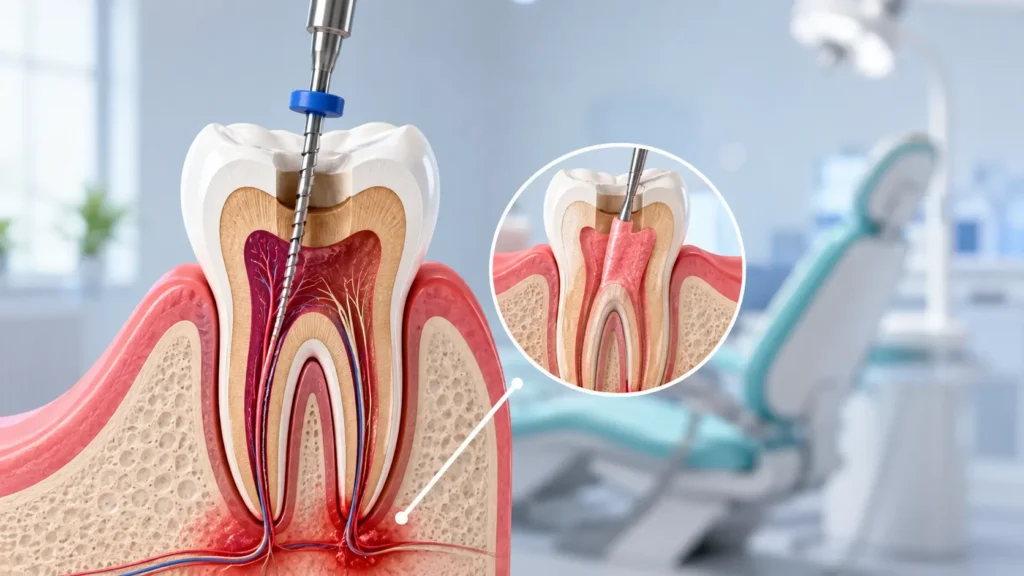
A healthy smile plays an important role in your overall health. Tooth decay, deep cavities, injuries, or infections can damage the inner part of a tooth and cause pain. In many cases, removing the tooth is not necessary. Root Canal Treatment helps save the natural tooth, remove the infection, and reduce pain.
Many people worry when they hear about a root canal. Today, dental technology has made the procedure more comfortable than before. If you want to learn about a Tooth canal procedure or understand the benefits of Root treatment for teeth, knowing the right information can help you make better decisions about your dental care.
In this blog, you will learn about Root Canal Treatment, its benefits, the procedure, recovery, and simple tips to keep your teeth healthy.
What Is Root Canal Treatment?
Root Canal Treatment is a dental procedure used to remove infected or damaged pulp from inside a tooth. The pulp contains nerves, blood vessels, and connective tissue that help the tooth grow during its early development.
When the pulp becomes infected due to decay, cracks, or injury, bacteria can spread inside the tooth and cause pain or swelling. During the procedure, the dentist removes the infected tissue, cleans the inside of the tooth, seals it, and restores it with a filling or crown.
This treatment helps preserve the natural tooth instead of removing it.
Why Is a Tooth Canal Needed?
A Tooth canal procedure becomes necessary when the pulp inside the tooth is infected or inflamed.
Common causes include:
- Deep tooth decay
- Repeated dental procedures
- Cracked or chipped teeth
- Dental injuries
- Untreated cavities
- Severe tooth infection
Ignoring these problems may lead to abscess formation, severe pain, and tooth loss.
Symptoms That May Require Root Treatment for Teeth
Several warning signs indicate that you may need Root treatment for teeth.
Common symptoms include:
- Persistent toothache
- Pain while chewing
- Sensitivity to hot or cold foods
- Swollen gums
- Darkening of the tooth
- Pus near the affected tooth
- Facial swelling
If you experience these symptoms, schedule a dental appointment as soon as possible.
Benefits of Root Canal Treatment
Modern Root Canal Treatment offers several advantages over tooth extraction.
Some important benefits include:
- Saves the natural tooth
- Relieves severe pain
- Removes infection
- Restores normal chewing function
- Prevents infection from spreading
- Improves oral health
- Maintains natural appearance
Saving your natural tooth usually provides better long-term results than replacing it with an artificial tooth.
How Is Root Canal Treatment Performed?
The procedure usually takes one or two dental visits, depending on the condition of the tooth.
Step 1: Examination and X-rays
The dentist examines the affected tooth and takes dental X-rays to determine the extent of the infection.
Step 2: Local Anesthesia
The area around the tooth is numbed to ensure patient comfort during the procedure.
Step 3: Cleaning the Tooth Canal
The dentist creates a small opening in the tooth and carefully removes the infected pulp. The inside of the Tooth canal is then cleaned and disinfected.
Step 4: Filling the Root Canal
After cleaning, the canals are filled with a special dental material to prevent future infection.
Step 5: Restoring the Tooth
Finally, the dentist restores the tooth with a filling or crown to protect it and restore normal function.
Is Root Canal Treatment Painful?
Many people believe root canals are painful, but this is one of the biggest myths in dentistry.
With modern anesthesia and advanced dental techniques, Root Canal Treatment is usually no more uncomfortable than getting a regular filling.
In fact, the procedure removes the infection that causes pain, allowing patients to feel much better afterward.
Recovery After Root Treatment for Teeth
Most patients recover quickly after the procedure.
Some mild discomfort may occur for a few days, but it usually improves with prescribed medication.
To support healing:
- Eat soft foods for the first few days.
- Avoid chewing on the treated tooth until fully restored.
- Brush and floss gently.
- Take medications as directed.
- Attend follow-up appointments.
Proper aftercare helps ensure successful Root treatment for teeth.
How to Prevent the Need for a Tooth Canal
Good oral hygiene reduces the risk of tooth infections.
Follow these simple habits:
- Brush twice daily.
- Floss every day.
- Limit sugary foods and drinks.
- Visit the dentist regularly.
- Treat cavities early.
- Wear a mouthguard during sports if needed.
Preventive care helps protect your teeth and reduces the need for a Tooth canal procedure.
Common Myths About Root Canal Treatment
Many misconceptions prevent people from seeking timely dental care.
Myth 1: Root Canals Are Extremely Painful
Modern dentistry has made the procedure comfortable and effective.
Myth 2: Tooth Extraction Is Always Better
Saving the natural tooth is usually the preferred option whenever possible.
Myth 3: Recovery Takes Several Weeks
Most patients return to normal activities within a day or two.
Understanding these facts can reduce fear and encourage early treatment.
Who Needs Root Canal Treatment?
Dentists may recommend Root Canal Treatment for patients with:
- Deep cavities
- Severe tooth infections
- Cracked teeth
- Dental trauma
- Persistent tooth pain
- Inflamed tooth pulp
Early treatment prevents more serious complications and preserves the natural tooth.
Importance of Regular Dental Check-Ups
Routine dental visits help identify problems before they become severe.
During regular check-ups, dentists can:
- Detect early decay
- Identify small cracks
- Monitor existing fillings
- Perform professional cleaning
- Recommend preventive treatments
Early diagnosis often prevents the need for extensive dental procedures.
Tips for Maintaining Healthy Teeth
Healthy daily habits support long-term oral health.
Some useful tips include:
- Brush with fluoride toothpaste.
- Floss every day.
- Drink plenty of water.
- Eat a balanced diet.
- Limit sugary snacks.
- Avoid tobacco products.
- Schedule dental check-ups every six months.
These habits reduce the risk of infections and help maintain a healthy smile.
When Should You Visit a Dentist?
Seek professional dental care if you notice:
- Severe tooth pain
- Swollen gums
- Sensitivity lasting several days
- Tooth discoloration
- Pain while chewing
- Pus around a tooth
Prompt treatment improves the success of Root treatment for teeth and prevents further complications.
Conclusion
Root Canal Treatment is a safe and effective way to save an infected tooth while relieving pain and restoring normal function. Modern dental techniques have made the procedure comfortable, allowing patients to recover quickly and preserve their natural smiles.
Whether you need a Tooth canal because of deep decay or require Root treatment for teeth after an injury, early diagnosis and timely care offer the best results. Regular dental check-ups, good oral hygiene, and healthy lifestyle habits can help protect your teeth and reduce the risk of future dental problems. By taking proper care of your oral health, you can enjoy a stronger, healthier smile for years to come.